
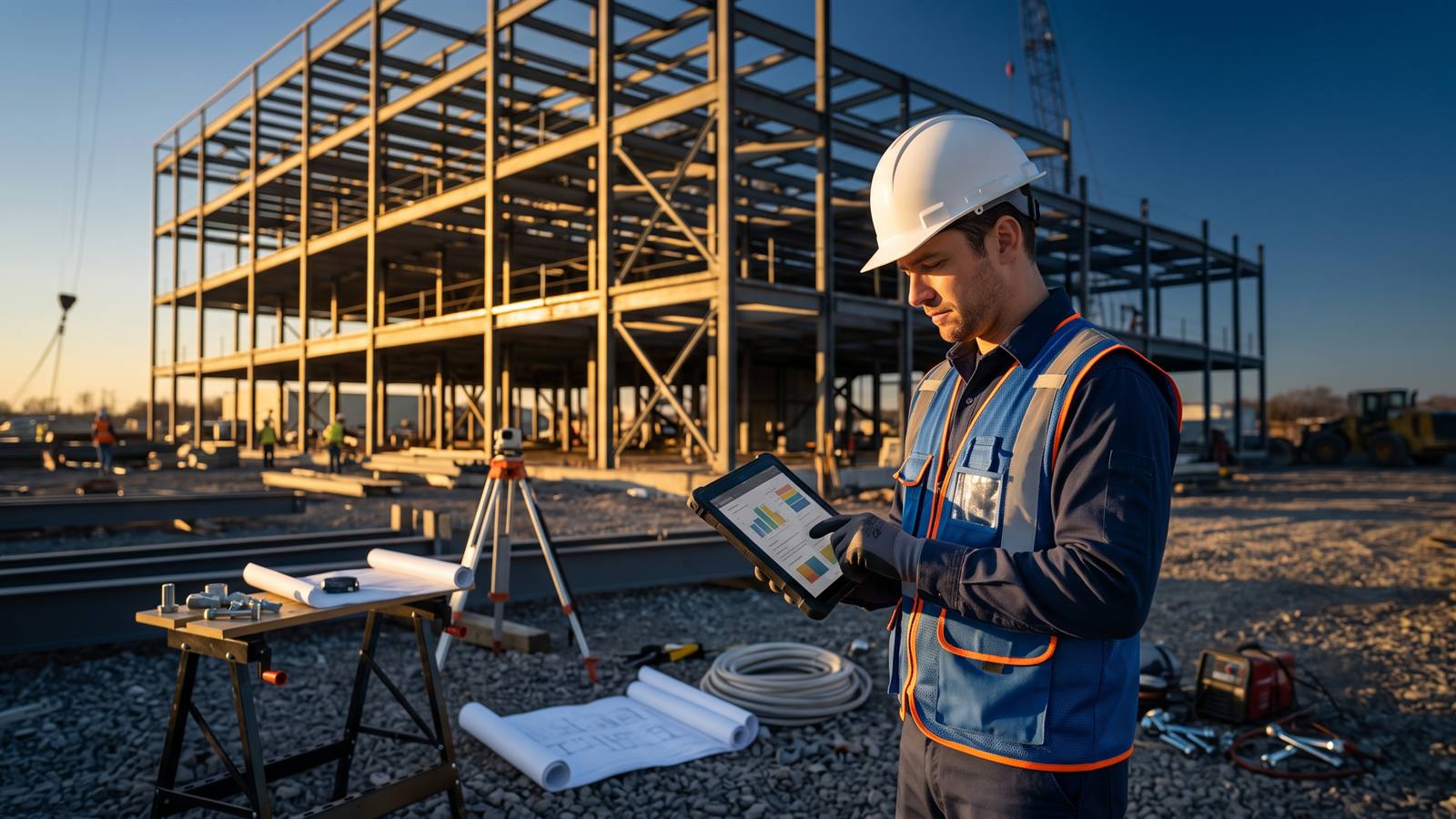
Construction administration is the best remaining place in an engineering firm to put AI to work, and almost nobody is looking at it. The reason is unglamorous: CA is not where firms think their value lives, so it is not where they look for improvement. It is also where the volume is, where the deadlines are hard, where the work is repetitive, and where the record you leave behind decides how a dispute goes two years later.
Submittals get the attention because they are the obvious pile. The rest of CA is a bigger pile spread across more people.
The four workflows that matter
RFI responses. A contractor asks a question. Somebody has to find the answer in the drawings, the specifications, and the prior correspondence, then write a response that answers it without accidentally directing means and methods or authorizing a change. The finding is search. The writing is drafting against a pattern. Both are work a model does well, and the judgment about scope and cost implication stays with the engineer, where it belongs.
The real gain here is not speed on any single RFI. It is consistency across three hundred of them, answered by six people over eighteen months, where today the tone and thoroughness vary by who was on rotation that week.
Field observation reports. An engineer visits a site, takes photographs and notes, and turns that into a report someone will read. The visit requires a person. The transcription, formatting, cross-referencing to prior reports, and tracking of whether last month's item was resolved does not. This is one of the clearest wins in the whole phase because the input is already unstructured and the output is already templated.
Correspondence and the project record. Every CA phase generates a body of letters, emails, meeting minutes, and notices. Two years later that body is either a defensible chronology or a mess. Assembling, summarizing, and searching it is exactly the work that used to consume a junior engineer for a week when something went wrong.
Closeout. Punch lists, O&M review, as-built comparison, warranty documentation. Closeout is where projects go to die administratively, largely because the team has mentally moved on and the work is pure assembly. It is also, for that reason, the least risky place to try something.
Why CA is a better first pilot than design
Three reasons, and they are the same reasons that make it uncomfortable to talk about.
The work is high volume and repetitive, so a small per-item gain compounds into a real number. The output is reviewed by a licensed professional before it leaves, so the review gate you need already exists rather than having to be invented. And the failure mode is visible: a wrong RFI response gets challenged by a contractor who reads it carefully, unlike a subtly wrong calculation that nobody checks.
That third point is the one I would emphasize. The safest place to introduce a tool is where errors surface fast and cheaply. CA has an adversarial reader built into the process, which is an underrated form of quality control. It is the same logic behind starting with submittal review rather than approval.
The best place to try something new is where being wrong gets caught quickly by somebody with an incentive to catch it.
The line that does not move
An RFI response is a professional communication with contractual consequences. It can create a change order, waive a requirement, or accidentally assume responsibility for means and methods. None of that changes because a draft was generated.
So the rule is the same one that applies everywhere else in the practice: the tool drafts, a qualified person decides, and the person who signs is the person responsible. Anyone selling automatic RFI response is selling you a liability transfer that does not legally exist, which is the whole subject of AI and the PE seal.
The practical control is simple. Every generated response carries the source citations it drew from: sheet, detail, specification section, prior RFI. The reviewer checks the citations rather than rederiving the answer. That is a faster review than writing from scratch and a more rigorous one than most responses get today.
How to run the trial
One active project, one CA phase, one workflow. I would pick field reports if you want a quick visible win, or RFIs if you want the more valuable one.
Measure three things: turnaround time from receipt to issued response, the number of responses that came back challenged or required a follow-up RFI, and the hours booked to CA on that project versus a comparable one. The middle number is the quality check, and it is the one people forget to track. If turnaround improved and challenges went up, you did not gain anything.
Run it for a full phase rather than a few weeks. CA has a rhythm, and the early submittals and the closeout push behave differently from the middle.
Why this is worth your attention now
CA hours are frequently the least profitable in the firm. They are often lump sum or capped, they run long when the project runs long, and they are staffed by people who would rather be designing. That combination makes CA the place where efficiency converts most directly into margin rather than into a smaller invoice, which is the distinction I work through in what AI does to your fees.
It is also the phase where your firm's reputation with a contractor is actually made. Fast, consistent, well-reasoned responses are what a builder remembers when the next project comes up for selection. That is a business development benefit that never appears in a time savings calculation.
If you want your CA workflows mapped and the highest-volume one automated with the review gate built in, that is what our workflow automation engagement does. Start a conversation.
← Back to insights